Queen Creek, AZ · Serving ZIP 85142 & 85140 Open 24/7 · (480) 741-9332
Water Heater Repair or Replacement: How to Decide
The Direct Answer

Water Heater Repair or Replacement: How to Decide

If your water heater is under 6 years old and a single component has failed, repair is almost always the better value. If it's past 8 years old, or you're facing a second repair within two years of the first, replacement is usually the smarter choice. Everything in between comes down to the specific repair cost versus a new unit's price, and whether the tank itself, not just a part, is the problem.

Decision Guide

Repair Or Replace, By Situation

SituationRecommendationWhy
Under 6 years, single failed partRepairRepair cost is a small fraction of replacement
6-8 years, first repairUsually repairStill reasonable remaining lifespan expected
8+ years, second repair in 2 yearsReplaceRepeated failures signal broader wear
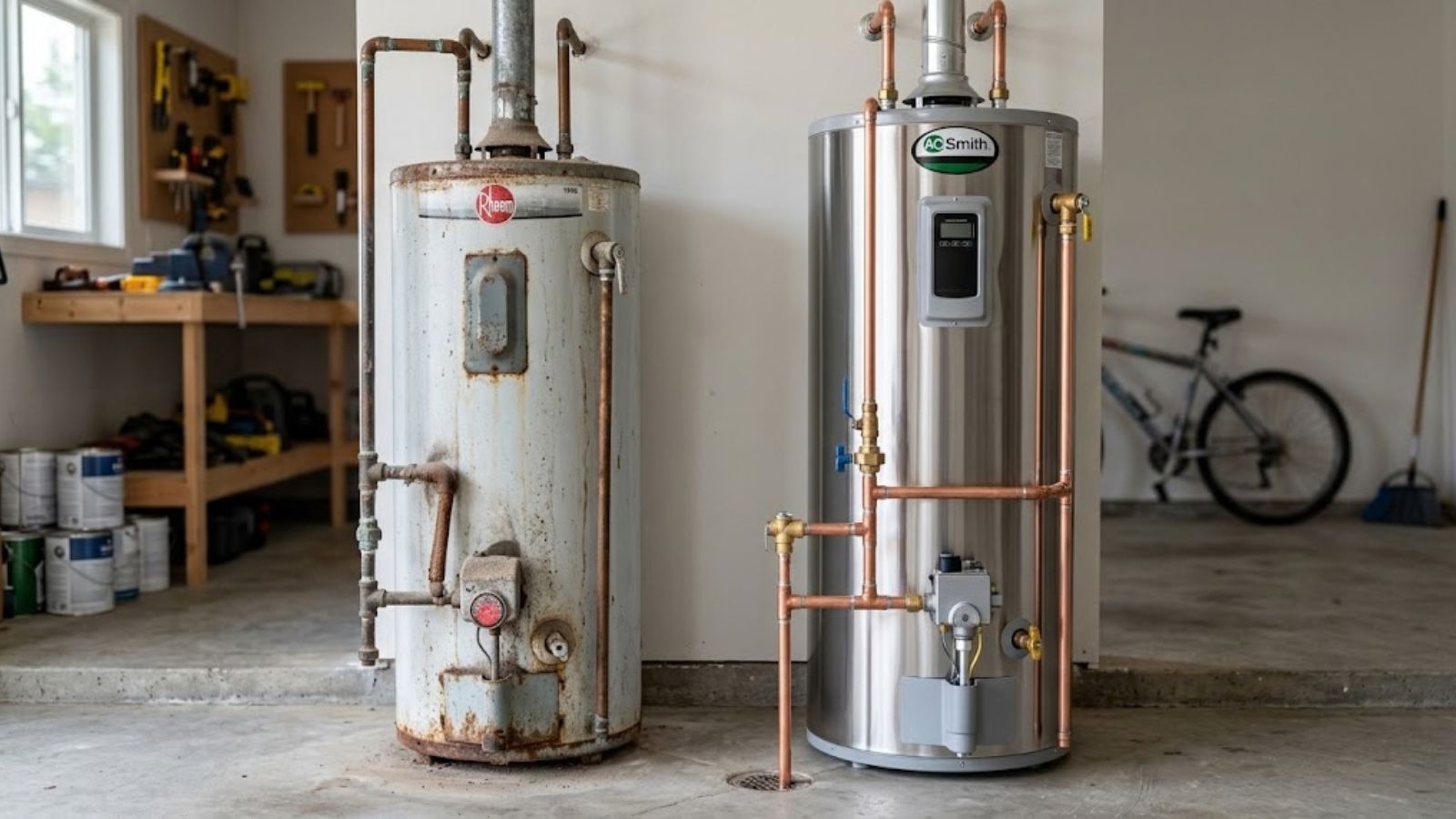
Any age, leak from tank bodyReplaceInternal corrosion isn't repairable
Any age, rust-colored waterReplaceSign of internal tank corrosion

Why Queen Creek Shifts These Numbers Earlier

The age thresholds above assume a fairly typical water supply. Queen Creek's groundwater runs genuinely hard, commonly in the 20 to 30 grains-per-gallon range, and that hardness accelerates scale buildup inside a tank faster than in a milder-water market. In practice, that means a water heater here is more likely to need real attention on the earlier side of that 6-to-8-year window than the later side. A unit that's reached 8 years here has usually seen more cumulative wear than an 8-year-old unit somewhere with softer water.

None of this means every Queen Creek water heater fails early. Regular maintenance, particularly an annual flush to clear sediment, genuinely extends a tank's working life even in hard water. But if you've never had yours flushed, that's worth factoring into where your unit likely sits on this timeline.

Never had yours flushed? Call (480) 741-9332 to ask about it.

Tank Or Tankless: Does It Change This Decision?

The repair-versus-replace logic works the same way for both tank and tankless units, though tankless systems fail differently. A tankless unit is less likely to develop the tank-body corrosion that forces replacement on a standard tank, but it's more sensitive to scale buildup on its heat exchanger, which shows up as error codes or inconsistent temperature rather than a leak. If you're already on a tankless unit and skipping the recommended annual descaling, that's the more likely driver of an early repair-or-replace decision than simple age.

What A Real Diagnosis Looks Like

The honest version of this decision isn't something you make from symptoms alone. A plumber testing the actual components, thermostat, heating elements, gas valve or igniter, and checking the tank itself for internal corrosion, can tell you with real confidence which category your unit falls into. That's different from a generic rule of thumb applied without ever opening the unit up, which is why a diagnostic visit is worth the cost even if the answer turns out to be "repair it."

Get a real diagnosis: Call (480) 741-9332.

What Replacement Actually Involves

If replacement is the right call, a standard tank-to-tank swap is usually completed the same day, often within a few hours, including removing and hauling away the old unit. Switching to a different type, like going from tank to tankless, or bringing an older installation up to current venting and strapping code, takes longer and involves more upfront planning. Either way, the goal is a unit sized correctly for your household and rated appropriately for how hard Queen Creek's water actually runs, not just the cheapest option on the shelf.

Whichever direction you go, ask specifically what warranty applies, both on parts and labor, since a longer warranty period is a reasonable way to hedge against another early failure in water this hard.

A Simple Rule Of Thumb To Keep In Mind

If a repair quote is running close to half the price of a new unit installed, that's usually the signal to seriously consider replacement instead, even if your water heater technically qualifies for a repair under the age guidelines above. A cheap fix on an aging unit can buy a few more months, but it rarely buys years, and a second repair call within that window often ends up costing more in total than replacing the unit would have the first time.

What A Delayed Decision Actually Costs

Putting off a repair-or-replace decision rarely makes the eventual bill smaller. A water heater that's struggling along on a failing part is usually working harder to compensate, which shows up as higher energy use in the meantime. If the delay ends in a tank failure rather than a controlled decision, you're now also dealing with water damage cleanup on top of the replacement itself. That often happens at a moment when you didn't get to choose the timing or shop around for the best option.

None of this means every borderline case needs an immediate decision. It means the honest math almost always favors deciding proactively once the signs genuinely point toward replacement, rather than waiting for a full, unplanned failure to force the choice for you.

Questions Worth Asking Before You Commit

Whichever way you're currently leaning, a few direct questions asked upfront help confirm it's genuinely the right call for your specific situation. If repairing, ask what the realistic remaining lifespan is after the fix, not just whether the fix will work today. If replacing, ask what's actually driving the recommendation: age, a specific failed component, or a leak. The reasoning should be concrete, not just a general sense that it's "probably time." An honest plumber will answer both questions directly rather than steering you toward whichever option happens to be more profitable for that visit.

Get a second, honest opinion: Call (480) 741-9332.

Not Sure Which Way To Go?

Get a real diagnosis and an honest recommendation, not a sales pitch.

☎ Call (480) 741-9332
Related Reading

More On This Topic

For a real diagnostic visit, see water heater repair. If replacement turns out to be the right call, water heater installation & replacement covers tank and tankless options with same-day service in most cases.

Questions

Frequently Asked Questions

Yes, if the tank itself is leaking rather than a single component failing. A leak from the tank body means internal corrosion, which isn't repairable regardless of the unit's age.

It shortens the timeline. A water heater here often needs replacement on the earlier end of its rated lifespan due to scale buildup, so the age thresholds in this guide should be read as slightly more conservative than they would be in a market with softer water.

A repair, like a heating element or thermostat, usually runs $200 to $500. A full replacement runs $1,400 to $3,600 for a standard tank, or more for tankless. The math tips toward replacement once repair costs start approaching a meaningful fraction of a new unit's price.

The manufacture date is usually stamped on a data plate on the tank itself, often disguised inside the serial number. A plumber can read this for you during a diagnostic visit if you can't find or decode it yourself.

By the Queen Creek Apex Plumbing team · Published March 2026

Service Area

Queen Creek, AZ Plumbing Coverage

Call Now: (480) 741-9332 ☎