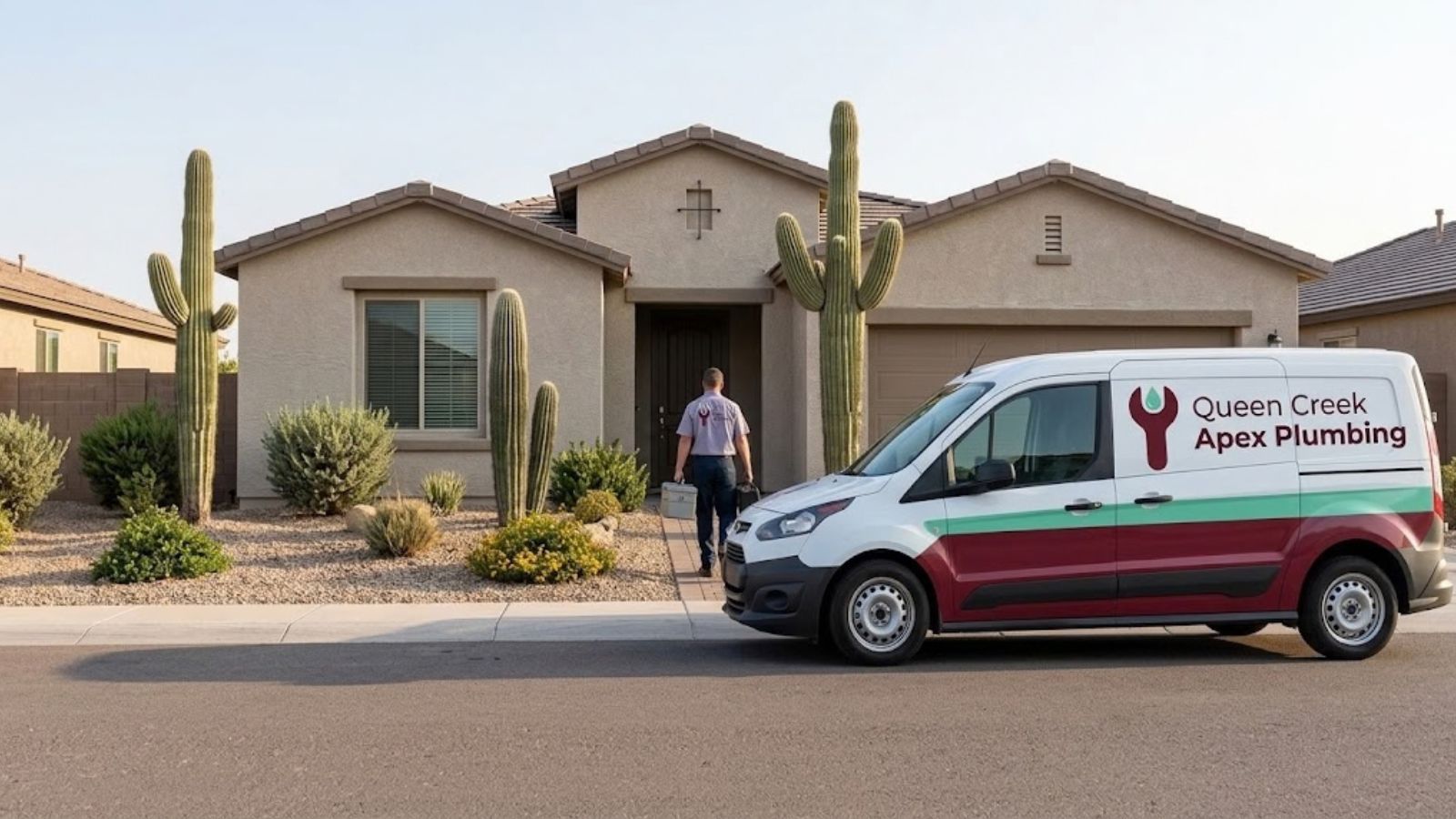
Queen Creek sits in the East Valley of the Phoenix metro, split across Maricopa and Pinal counties, and most of the housing stock here is genuinely new: the large majority of homes in the core 85142 ZIP were built after 2000. That's good news for pipe material (mostly PEX and copper rather than the aging galvanized lines older desert suburbs deal with), but it doesn't mean the ground and climate go easy on plumbing.
The desert clay and caliche soil under Queen Creek is dense and shifts as it wets and dries. That movement puts real stress on slab foundations and the supply lines running under them, and a shifted slab is a common cause of a slow, hard-to-place leak even in a home built ten years ago, not just an old one. Monsoon season adds a second pressure point: heavy, fast rain can overwhelm drainage and sewer lines that handle a dry desert climate the rest of the year, backing water up into homes that rarely see standing water otherwise. And the exposed fittings, hose bibs, and irrigation lines that come with desert landscaping take real wear from summer heat that regularly tops 110°F.
Water is the other factor. Queen Creek's municipal supply comes entirely from local groundwater wells, and it runs very hard, commonly measured in the high-teens to 20-plus grains-per-gallon range, well above the six grains most of the country deals with. That hardness accelerates scale buildup inside water heaters and tankless units specifically, which is a real part of why water heater repair and replacement rank among the most-searched plumbing needs in this city.
Queen Creek has also been one of the fastest-growing towns in the East Valley for years. A lot of the plumbing we work on is still under its original manufacturer warranty on paper, but that warranty doesn't cover the labor to diagnose and fix what's actually failing. It also never covers the supply line or slab issue that caused the failure in the first place.