Queen Creek, AZ · Serving ZIP 85142 & 85140 Open 24/7 · (480) 741-9332
How Often to Flush Your Water Heater in Queen Creek
The Direct Answer

How Often to Flush Your Water Heater in Queen Creek

Manufacturers generally recommend flushing a water heater once a year for average water conditions, or every 6 months in hard water areas. Queen Creek's groundwater tests at 20 to 30 grains per gallon, well into the "very hard" category, which puts every 6 months as the realistic recommendation here rather than the once-a-year default most homeowners assume applies everywhere.

Signs You're Overdue For A Flush

  • ✓
    Popping or rumbling sounds during the heating cycle, caused by water bubbling under a sediment layer.
  • ✓
    Noticeably longer time to get hot water, or hot water that runs out faster than it used to.
  • ✓
    Rusty or discolored water when the tap is first turned on, especially first thing in the morning.
  • ✓
    You genuinely can't remember the last time it was flushed, or don't know if it ever has been.

What Flushing Actually Prevents

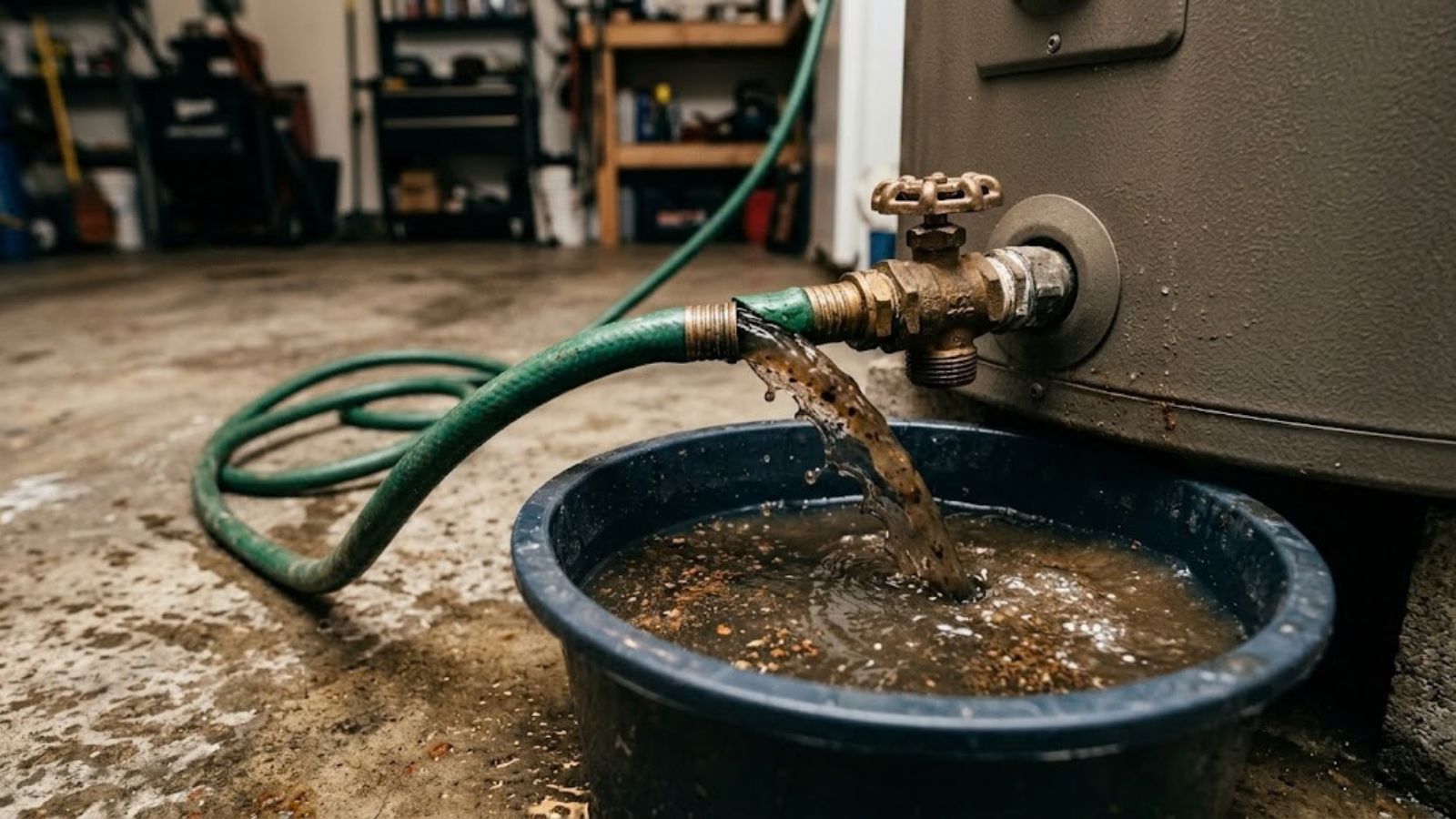
Sediment settles at the bottom of a tank water heater as minerals separate out of the water during heating, and in Queen Creek's hard water, that process happens meaningfully faster than in a milder-water market. Left unaddressed, that sediment layer insulates the bottom of the tank from the heating element, forcing the unit to work harder and use more energy to reach the same water temperature. In gas units, it can also create hot spots that stress the tank itself over time.

A regular flush clears that sediment before it accumulates into a real problem, which is a meaningfully cheaper and simpler maintenance step than dealing with the reduced efficiency, higher energy bills, and shortened lifespan that come from skipping it for years at a time.

If It's Never Been Flushed

A water heater that's gone years without a flush sometimes has a drain valve that's partially or fully clogged with the very sediment the flush is meant to remove, which can complicate a first-time flush attempted without the right approach. This is one of the more common reasons a DIY flush on an older, never-serviced unit goes wrong: a stuck valve, a slow drain, or sediment that's hardened rather than staying loose. It's a reasonable case for professional service even if you're generally comfortable with DIY maintenance.

If your unit is old enough that you're unsure whether flushing at this point is worth it versus simply planning for replacement, that's a fair question to ask directly rather than guessing either way.

Not sure when yours was last flushed? Call (480) 741-9332.

Setting A Reminder That Actually Works

The honest reason most water heaters go years without a flush isn't that homeowners don't care; it's that there's no obvious trigger reminding anyone it's due, unlike an oil change with a mileage sticker or a filter with a replacement date printed on it. Setting a recurring calendar reminder every 6 months, tied to a fixed point like a birthday or a seasonal change, is a simple, low-effort way to actually keep up with this rather than relying on remembering.

Pairing the flush with another regular household task, checking smoke detector batteries, for instance, gives you a natural trigger that's easier to remember than a maintenance task in isolation.

What A Professional Flush Includes

Beyond just draining and refilling the tank, a professional flush includes checking the anode rod's condition, a sacrificial component that protects the tank from corrosion and depletes faster in hard water, and confirming the temperature and pressure relief valve is functioning correctly. These are exactly the kind of details easy to miss on a DIY flush focused only on clearing sediment, and they're part of why a professional visit catches issues a homeowner-only flush sometimes doesn't.

Time for a flush? Call (480) 741-9332.

Doing A Basic Flush Yourself

For a homeowner comfortable with basic maintenance, a flush involves turning off the water heater, connecting a hose to the drain valve near the tank's bottom, and draining the tank fully while cold water periodically flushes through to help clear remaining sediment. The process typically takes 30 to 45 minutes start to finish. The most common DIY mistake is skipping the step of turning off the water heater first, which risks running a gas burner or electric element dry, so that step matters more than it might seem.

Tankless Units: Descaling Instead

A tankless water heater doesn't accumulate sediment the way a tank unit does, since there's no standing water to settle minerals out of, but it does develop scale on its heat exchanger from the mineral content passing through continuously. Descaling involves circulating a mild acidic solution through the unit to dissolve that buildup, a different process from a tank flush but serving a similar purpose: protecting the unit's efficiency and lifespan from Queen Creek's hard water.

What Skipping Maintenance Actually Costs

A flush costs a fraction of a repair call, and a repair call costs a fraction of full replacement, so the math consistently favors staying current on maintenance rather than waiting until something fails outright. A water heater that fails years early because of neglected sediment buildup, forcing a full replacement instead of a routine flush, is genuinely one of the more avoidable plumbing expenses homeowners run into. It's avoidable specifically because the fix itself is inexpensive, quick, and well understood by any licensed plumber.

Schedule a flush today: Call (480) 741-9332.

Renters And Landlords: Who's Responsible?

For a rental property, water heater maintenance typically falls to the landlord or property manager rather than the tenant, though the specific responsibility depends on the lease terms. If you're a landlord managing multiple Queen Creek properties, standardizing a 6-month flush schedule across units is a straightforward way to reduce emergency calls and extend equipment life across the whole portfolio. That beats handling each unit reactively as problems come up one at a time.

Never Had Yours Flushed?

Get it done right, whatever condition it's currently in.

☎ Call (480) 741-9332
Related Reading

More On This Topic

See water heater repair if you're already seeing symptoms, or tankless water heater service for descaling if you have a tankless unit specifically.

Questions

Frequently Asked Questions

Sediment builds up continuously at the bottom of the tank, reducing efficiency, causing popping or rumbling noises, and shortening the unit's working life. In Queen Creek's hard water, this happens faster than manufacturer guidelines written for average water conditions assume.

It's a manageable DIY task for a comfortable homeowner on a standard tank unit, though older units or ones that have never been flushed can have complications, like a stuck drain valve, that make professional service the safer choice.

No, tankless units need periodic descaling instead of flushing, a different process addressing scale on the heat exchanger rather than sediment settling at a tank bottom. The recommended frequency in hard water is similarly more often than manufacturer defaults assume, typically annually here.

A standard flush is a relatively inexpensive maintenance service, generally far less than the cost of a single repair call, let alone a full replacement caused by neglected maintenance.

By the Queen Creek Apex Plumbing team · Published March 2026

Service Area

Queen Creek, AZ Plumbing Coverage

Call Now: (480) 741-9332 ☎