Queen Creek, AZ · Serving ZIP 85142 & 85140 Open 24/7 · (480) 741-9332
Toilet Running Constantly? Cause and Cost in Queen Creek
The Direct Answer

Toilet Running Constantly? Cause and Cost in Queen Creek

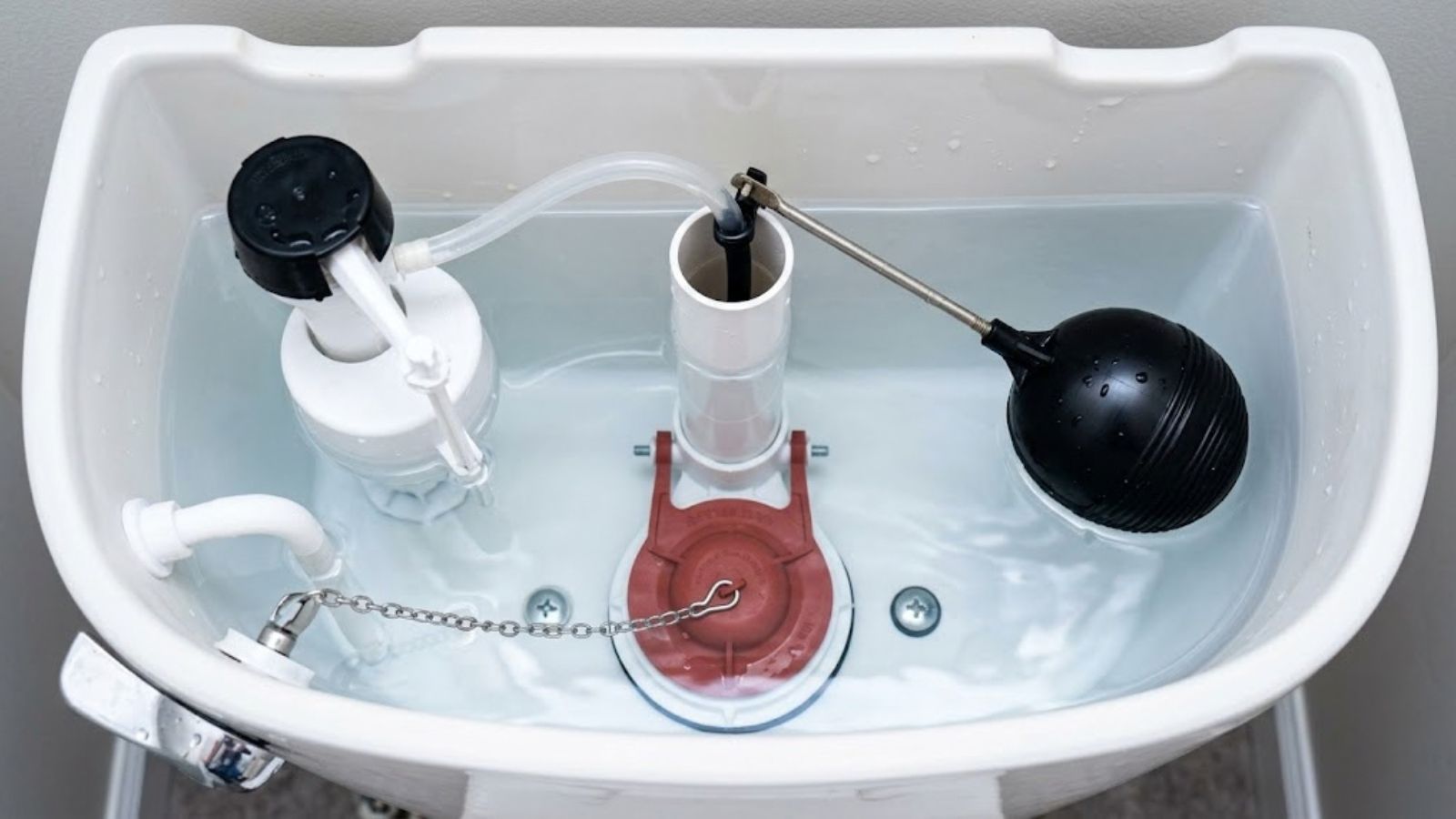
Most running toilets come down to a worn flapper or a failing fill valve, both inexpensive parts, typically $15 to $40 installed for a straightforward swap. In Queen Creek specifically, hard water scale buildup on these same components is a common accelerating factor, which is why the same repair sometimes needs to happen more often here than in a milder-water market.

Diagnosing It Yourself

What To Check First

SymptomLikely CauseTypical Fix Cost
Water trickling into bowl constantlyWorn flapper not sealing$15 to $30
Refilling cycles randomly, on its ownFill valve leaking past seal$20 to $40
Hissing sound, water never stopsFill valve stuck open or scaled$25 to $50
Persists after flapper/valve swapCracked overflow tube or seat issueVaries, needs diagnosis

The Real Dye Test

A simple way to confirm a flapper leak without guessing: add a few drops of food coloring to the tank, wait 15 to 20 minutes without flushing, then check the bowl. If color appears in the bowl, water is seeping past the flapper seal even when the toilet isn't actively running, confirming that's the source rather than a different issue elsewhere in the tank.

This test is worth doing even if you can't visibly see or hear the toilet running, since a slow flapper leak can be quiet enough to miss entirely while still meaningfully affecting your water bill over a full month.

Why Queen Creek Sees This More Often

Toilet flappers and fill valves are made of rubber and plastic components designed to create a tight seal, and mineral deposits from hard water accumulate on exactly those sealing surfaces over time. Queen Creek's water hardness, tested at 20 to 30 grains per gallon, meaningfully accelerates that scale buildup compared to a market with softer water. That's why the same standard $20 part sometimes needs replacing on a shorter cycle here than manufacturers' general guidelines would suggest.

A whole-home water softener addresses this at the source for every fixture in the house, not just toilets, which is worth considering if you're replacing the same parts more often than seems reasonable.

Tried the fix and it's still running? Call (480) 741-9332.

When It's More Than Just A Part Swap

If a fresh flapper and fill valve don't stop the running, a few less common causes are worth ruling out. A cracked overflow tube inside the tank lets water escape continuously regardless of the flapper's condition, and it's not always visible without draining the tank first. A misaligned or waterlogged float can cause the fill valve to think the tank isn't full when it actually is, triggering constant refilling. And in older or lower-quality toilets, the flush valve seat itself, the ring the flapper seals against, can develop enough wear or scale roughness that no flapper seals against it properly anymore. That sometimes means replacing that component, or the toilet itself, rather than just the flapper.

Multiple Toilets, Same Issue?

If more than one toilet in your home has needed the same repair within a similar timeframe, that's a real pattern worth paying attention to rather than a coincidence. It usually points toward the water hardness itself as the underlying driver rather than a defect in any specific toilet. That's exactly the kind of pattern that makes a whole-home softener the more efficient fix, compared to repeatedly replacing parts fixture by fixture as each one fails in turn.

Doing The Repair Yourself

A flapper replacement takes most homeowners under 15 minutes: shut off the water supply valve behind the toilet, flush to drain the tank, unhook the old flapper's chain and remove it, and attach the new one. Match the size and shape to your specific toilet model, since flappers aren't perfectly universal. A fill valve swap takes slightly longer and involves disconnecting the water supply line at the tank, but is still a manageable task with basic tools and a replacement part matched to your toilet's brand.

If either job feels outside your comfort level, that's a completely reasonable line to draw; these are inexpensive enough repairs that professional service still makes financial sense even for a straightforward part swap.

Older Toilets: When Replacement Makes More Sense

A toilet installed before the early 1990s often predates modern low-flow standards and can be harder to source matching parts for, since flapper sizes, flush valve designs, and tank hardware have changed meaningfully since then. If you're chasing repeated running issues on a genuinely old toilet, replacement with a newer, more water-efficient model sometimes ends up more cost-effective than continuing to hunt for parts that fit an outdated design. There's also the water savings a modern toilet offers going forward.

Wondering if it's time to replace rather than repair? Call (480) 741-9332.

A Running Toilet You Can Hear At Night

A toilet that only seems to run occasionally, particularly at night when the house is otherwise quiet, is often a slow, intermittent flapper leak rather than a constant one. The pattern is usually the same: water slowly seeps past the flapper, the tank level drops just enough to trigger the fill valve, it briefly refills, and then goes quiet again until the cycle repeats. This intermittent pattern can be easy to write off as normal since it isn't constant, but it still adds up to real wasted water and gallons over the course of a full month, the same as a toilet that runs continuously, just spread out differently.

Hearing it run at night? Call (480) 741-9332.

Toilet Running And Won't Stop?

We'll diagnose it right and give you an honest, upfront price.

☎ Call (480) 741-9332
Related Reading

More On This Topic

See toilet repair & installation for the full service, or water softener installation if hard water is behind repeated fixture issues throughout your home.

Questions

Frequently Asked Questions

A straightforward flapper or fill valve replacement is a reasonable DIY job for a comfortable homeowner, usually under $20 in parts. If hard water scale is involved, or the issue persists after a part swap, that's when professional diagnosis makes more sense.

A running toilet can waste up to 200 gallons a day depending on severity, according to the American Water Works Association, enough to move a monthly water bill noticeably within a single billing cycle.

Queen Creek's extremely hard water, 20 to 30 grains per gallon, accelerates scale buildup on the same rubber and plastic components that fail in any toilet, which is why flapper and fill valve replacements tend to come up more frequently here than in markets with softer water.

Occasionally. If replacing the flapper and fill valve doesn't resolve it, the issue could be a cracked overflow tube, a misaligned float, or in rarer cases a problem with the toilet's internal flush valve seat, all worth a professional look if basic parts don't fix it.

By the Queen Creek Apex Plumbing team · Published March 2026

Service Area

Queen Creek, AZ Plumbing Coverage

Call Now: (480) 741-9332 ☎