Queen Creek, AZ · Serving ZIP 85142 & 85140 Open 24/7 · (480) 741-9332
Is Queen Creek's Hard Water Bad for Your Plumbing?
The Direct Answer

Is Queen Creek's Hard Water Bad for Your Plumbing?

Yes, genuinely so. Queen Creek's groundwater tests in the 20 to 30 grains-per-gallon range, classified as extremely hard, and that mineral load steadily deposits scale inside pipes, water heaters, and fixtures. It's not a cosmetic issue; it's a real, measurable factor in how fast plumbing components wear out in this specific town.

What's Actually Happening Inside Your Pipes

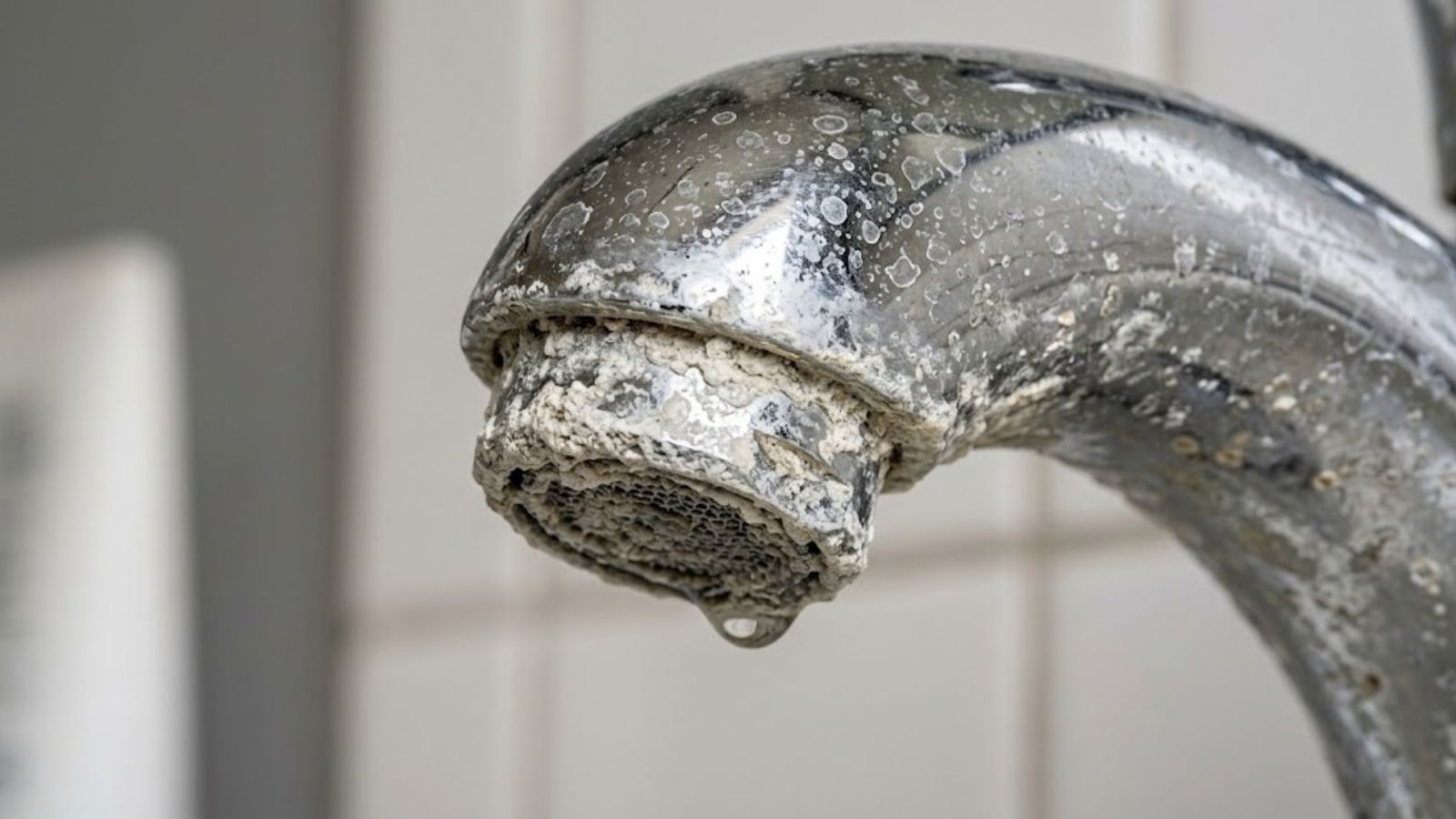
Every gallon of water that runs through your home's plumbing here carries dissolved calcium and magnesium. As that water passes through pipes and fixtures, especially anywhere it heats up, small amounts of those minerals crystallize out and stick to the surfaces they touch. Over months and years, that buildup narrows the usable diameter of a pipe, coats the heating element inside a water heater, and clogs the fine openings inside a faucet aerator.

None of this happens because anything was installed wrong. It's simply what this specific water does to plumbing over time, and it's the reason a water heater or faucet cartridge in Queen Creek often needs attention sooner than the same part would in a market with softer water.

Noticing scale buildup yourself? Call (480) 741-9332.

Where Queen Creek's Water Actually Comes From

Queen Creek's municipal water supply is drawn entirely from local groundwater wells, not surface water or a blended source the way some other Arizona cities use. Groundwater picks up dissolved minerals as it moves through rock and soil over long periods, which is the root cause of the hardness. This isn't a treatment failure or a quality problem in the sense of safety; the water meets federal and state drinking water standards. It's simply mineral-rich by the nature of its source, and that mineral content is what interacts with your plumbing every single day it runs through your home.

Comparing Softening Options

A traditional ion-exchange softener physically removes hardness minerals from the water using salt-based resin, and it's the option that actually addresses the scale problem described above. Salt-free "conditioners" alter how minerals behave in water without removing them, which can reduce some visible scale but doesn't stop hardness minerals from being present in the water your plumbing handles every day. At Queen Creek's hardness levels, most homeowners see meaningfully better, more noticeable results from a true softener, which is why we're upfront about that difference rather than defaulting to whichever system happens to be easier to sell.

Weighing softener options? Call (480) 741-9332 for an honest comparison.

Where It Shows Up First

The Real Symptoms, In Order

ComponentWhat Hard Water CausesTypical Timeline
Faucet aeratorsWeak flow from mineral buildupMonths to 1-2 years
Faucet cartridgesDrips that a washer swap won't fix2-4 years
Water heaterPopping/rumbling, reduced efficiency, early failureShortened from 8-12 years to often less
Supply pipesGradual internal narrowing, reduced pressureYears, cumulative

What Actually Fixes This

A correctly sized water softener is the direct fix, since it removes the hardness minerals through ion exchange before the water ever reaches your plumbing. The key word is "correctly sized": a softener sized using a generic calculator built around a milder water supply will regenerate too infrequently for water this hard and let hardness through between cycles. Sizing has to account for Queen Creek's real hardness number, not a national average.

For components that already have real scale buildup, softening stops the problem from getting worse, but it doesn't reverse existing damage. A water heater that's already scaled up internally will still benefit from a flush, and a faucet with a scaled cartridge still needs that cartridge replaced. Softening protects what comes next, not what's already happened.

Ready to stop the cycle? Call (480) 741-9332 for real sizing.

What Happens If You Do Nothing

Ignoring hard water doesn't stop the process; it just means the damage accumulates without anything slowing it down. A water heater that would have lasted 10 to 12 years with a softener and regular maintenance might fail closer to 6 or 7 years without either. Faucets and fixtures need replacement more often. Over the life of owning a home in Queen Creek, that adds up to real, avoidable cost, which is why addressing hardness proactively tends to pay for itself over time rather than being a pure expense.

Signs Your Water Is Actively Causing Damage

A few real signs tell you hardness is already affecting your home, not just a theoretical future problem. White or chalky residue building up around faucet spouts and showerheads is the most visible one. Reduced water pressure at a specific fixture, when the rest of the house seems fine, often points to a scaled-up aerator or a narrowing supply line at that location specifically. A water heater that's noticeably louder than it used to be, popping or rumbling during a heating cycle, means scale has already built up on the heating element or the tank bottom.

None of these signs require guesswork to confirm. A plumber can check the actual condition of a water heater or fixture and tell you honestly how much life is left versus how much scale has already accumulated, rather than guessing from the outside based on age alone.

What To Do If You Suspect Hard Water Damage

  • ✓
    Look for white or chalky residue around faucet spouts, showerheads, and the dishwasher's interior.
  • ✓
    Check whether any single faucet has noticeably weaker flow than the rest of the house, a sign of a scaled aerator.
  • ✓
    Listen for popping or rumbling from your water heater during a heating cycle.
  • ✓
    Note your water heater's age, using its data plate if needed, since scale-related wear compounds faster the older a unit gets.

A Note On Commercial Properties And Amenities

It's not just individual homes dealing with this. Community pools, clubhouse facilities, and commercial kitchens across Queen Creek face the same hardness at a larger scale, and the cost of managing it grows accordingly. A restaurant's dishwasher or a community's pool heating system can see real efficiency losses from scale buildup, which is a good reminder that this isn't a residential-only issue tied to any one type of property.

Ready To Stop The Damage?

Get your water tested and sized for a real softener recommendation.

☎ Call (480) 741-9332
Related Reading

More On This Topic

See water softener installation & repair for real sizing based on Queen Creek's actual hardness, or water heater repair if you're already seeing symptoms like popping or reduced hot water. If your faucets have started dripping or losing flow, faucet & sink repair covers that directly.

Questions

Frequently Asked Questions

Local testing commonly puts it in the 20 to 30 grains-per-gallon range, drawn entirely from groundwater wells. Under the Water Quality Association's classification, anything above 10.5 GPG counts as very hard, so Queen Creek's water sits well into that category.

Both. Scale builds up on the inside of pipes over years, gradually narrowing the usable diameter, and it accumulates faster inside anything that heats water, since heat accelerates mineral deposit. Fixtures, water heaters, and the pipes themselves are all affected, just at different rates.

A correctly sized softener removes the hardness minerals before they reach your plumbing, which stops the scale buildup at the source. It won't undo damage that's already happened, but it prevents new damage going forward.

No. Filtration for drinking water doesn't treat the water running through your pipes, water heater, and fixtures throughout the rest of the house. Softening is the specific fix for hardness; filtration solves a different problem.

By the Queen Creek Apex Plumbing team · Published March 2026

Service Area

Queen Creek, AZ Plumbing Coverage

Call Now: (480) 741-9332 ☎