Queen Creek, AZ · Serving ZIP 85142 & 85140 Open 24/7 · (480) 741-9332
Backflow Testing Requirements in Queen Creek, AZ
The Direct Answer

Backflow Testing Requirements in Queen Creek, AZ

Queen Creek requires annual testing of backflow prevention assemblies, and results are tracked through the Town's BSI Online reporting system. If your property has an irrigation system, a pool, or falls under certain commercial or mixed-use categories, you likely need this test every single year, and missing it can trigger a compliance notice from the Town.

What To Do Before Your Test Is Due

  • ✓
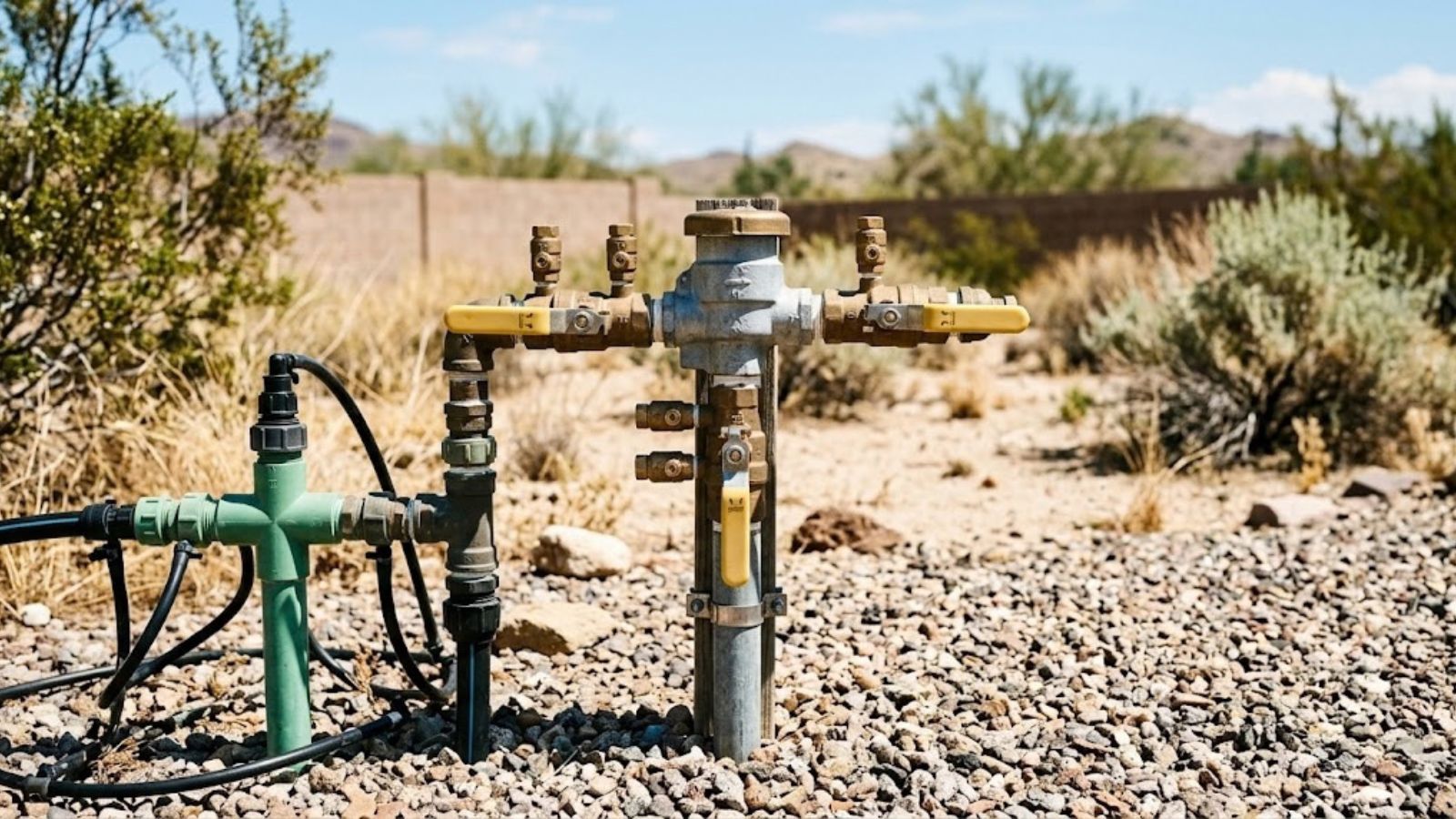
    Locate your backflow assembly, typically near the water meter or irrigation valve box.
  • ✓
    Confirm your last test date, since Queen Creek's BSI Online system tracks this on a rolling annual basis.
  • ✓
    Schedule testing before the deadline rather than after a notice arrives, avoiding any compliance gap.
  • ✓
    Ask your tester to confirm the report was actually submitted to BSI Online, not just completed on paper.

Why This Requirement Exists

A backflow prevention assembly exists to stop water from flowing backward into Queen Creek's public water supply, which matters most at properties where an irrigation system, pool, or other connection creates a real cross-connection risk between treated drinking water and water that could carry contaminants. Annual testing confirms the assembly's internal check valves are still sealing properly, since these mechanical components can degrade over time without any visible external sign.

This isn't unique to Queen Creek; it's a standard requirement across most Arizona municipalities and much of the country, tied to the same International Plumbing Code (IPC) provisions that govern cross-connection control generally. What's specific to Queen Creek is the BSI Online system used to track and report compliance.

Due for testing? Call (480) 741-9332.

How A Test Actually Works

A backflow test uses a calibrated gauge connected to the assembly's test cocks to check whether each internal check valve is holding pressure correctly and sealing in the right direction. The tester opens and closes a sequence of valves while monitoring the gauge, confirming the assembly performs as designed rather than just looking intact from the outside. A device can appear completely normal externally while an internal check valve has actually failed, which is exactly why the test exists rather than a simple visual inspection.

Results get documented and submitted directly to Queen Creek's BSI Online system as part of the service, so there's no separate paperwork or submission step left for you to handle afterward.

What Happens If A Test Fails

A failed test means the assembly needs repair or replacement before it's back in compliance, and this isn't uncommon on older assemblies or ones that have gone several years without maintenance. We'll walk you through what specifically failed and what the repair involves before doing any work, rather than treating a failed test as an automatic upsell into a bigger job than the situation actually calls for.

New Construction And Backflow Requirements

Newer Queen Creek homes with installed irrigation systems typically have a backflow assembly installed as part of original construction, meeting code at the time of the build. That doesn't mean testing starts later or differently than for an older assembly; the annual requirement applies from the point the assembly is installed and functioning, regardless of how new the surrounding home is. A lot of new homeowners are genuinely surprised to learn this obligation exists at all, since it's easy to assume "new" means "nothing to maintain yet."

Keeping Your Own Records

While Queen Creek's BSI Online system tracks compliance on the Town's end, it's still worth keeping your own copy of each year's test result. If you ever sell the property or a question comes up about compliance history, having your own documentation readily available saves a round of back-and-forth that a simple saved email or printed report avoids entirely.

Selling Or Buying A Home With A Backflow Assembly

If you're selling a home with an installed backflow assembly, current, documented compliance is worth confirming before listing. A buyer's inspector will likely ask about it, and a lapsed test is an easy, inexpensive thing to fix ahead of time rather than have it surface as a negotiating point. If you're buying, ask directly whether the property has a backflow assembly and, if so, request the most recent test result rather than assuming compliance based on the property looking well maintained overall from the outside.

Multiple Assemblies On One Property

Larger properties, or ones with both irrigation and a separate pool system, sometimes have more than one backflow assembly, each requiring its own annual test and its own report. It's worth confirming with whoever last tested your property whether all assemblies were covered, since a partial test that misses one device still leaves you out of compliance for that specific connection, even with a passing result on file for the others.

Multiple assemblies to test, or just one? Call (480) 741-9332 either way.

What A Passing Result Actually Confirms

A passing test result means the assembly's check valves are sealing correctly at the moment of testing, not a permanent guarantee for the coming year. Conditions can change, sediment intrusion, a worn seal, physical damage to exposed piping, which is exactly why the requirement is annual rather than a one-time certification. Treating last year's pass as ongoing proof of safety misses the point of why the test exists at all.

Schedule your annual test: Call (480) 741-9332.

Residential Vs. Commercial Requirements

Residential requirements typically kick in once a property has an irrigation system, pool, or certain other connections that create a cross-connection risk; a straightforward single-family home without any of those often has no backflow assembly at all and no testing requirement. Commercial properties, restaurants, medical or dental offices, and properties with fire sprinkler systems generally face stricter, more consistent requirements regardless of specific fixtures, since the risk profile and water usage differ meaningfully from a typical home.

If you're unsure which category your property falls into, that's a fair question to bring to us directly rather than guessing. An incorrect assumption in either direction, assuming you're exempt or assuming you're covered when you're not, can create a real compliance issue down the line.

Due For Backflow Testing?

We handle the test and the BSI Online reporting, start to finish.

☎ Call (480) 741-9332
Related Reading

More On This Topic

See backflow testing & prevention for the full service, and if you're in a community with a shared irrigation system like Encanterra, testing requirements are especially relevant given the community's golf course and pool amenities.

Questions

Frequently Asked Questions

Most standard single-family homes without irrigation systems or pools don't require annual testing. Homes with irrigation systems, pools, or certain plumbing configurations, and all commercial properties, typically do.

Look for a above-ground assembly near your water meter or irrigation valve box, usually with visible test cocks and shutoff valves. If you're not sure, we can identify it during a visit.

Queen Creek tracks compliance through its BSI Online system, and a missed test can result in a notice from the Town, and in some cases a service issue if compliance isn't restored. It's a straightforward, inexpensive test to stay current on.

A standard test typically takes 30 to 45 minutes for a single assembly. We handle the test itself and the required reporting to the Town's system, so there's nothing further for you to submit.

By the Queen Creek Apex Plumbing team · Published March 2026

Service Area

Queen Creek, AZ Plumbing Coverage

Call Now: (480) 741-9332 ☎